Getting the Shot

It was 0-dark-30 in the morning when I trudged the last few muddy steps, schlepping all my heavy gear, to the edge of the lagoon. A quick scan for any lurking crocodiles, and then it remained to wade into the dark, surely leach-infested, water. It was surprisingly cold, this early in the morning, and I lifted a silent hope to the gods of wildlife photography that I wouldn’t have to stay in that water too long. I set up my camera and tripod, hidden behind a clump of marsh vegetation, and waited. Mosquitoes gathered. But if I could get the close-up shot I wanted of a Streak-backed Oriole, it would be worth it.
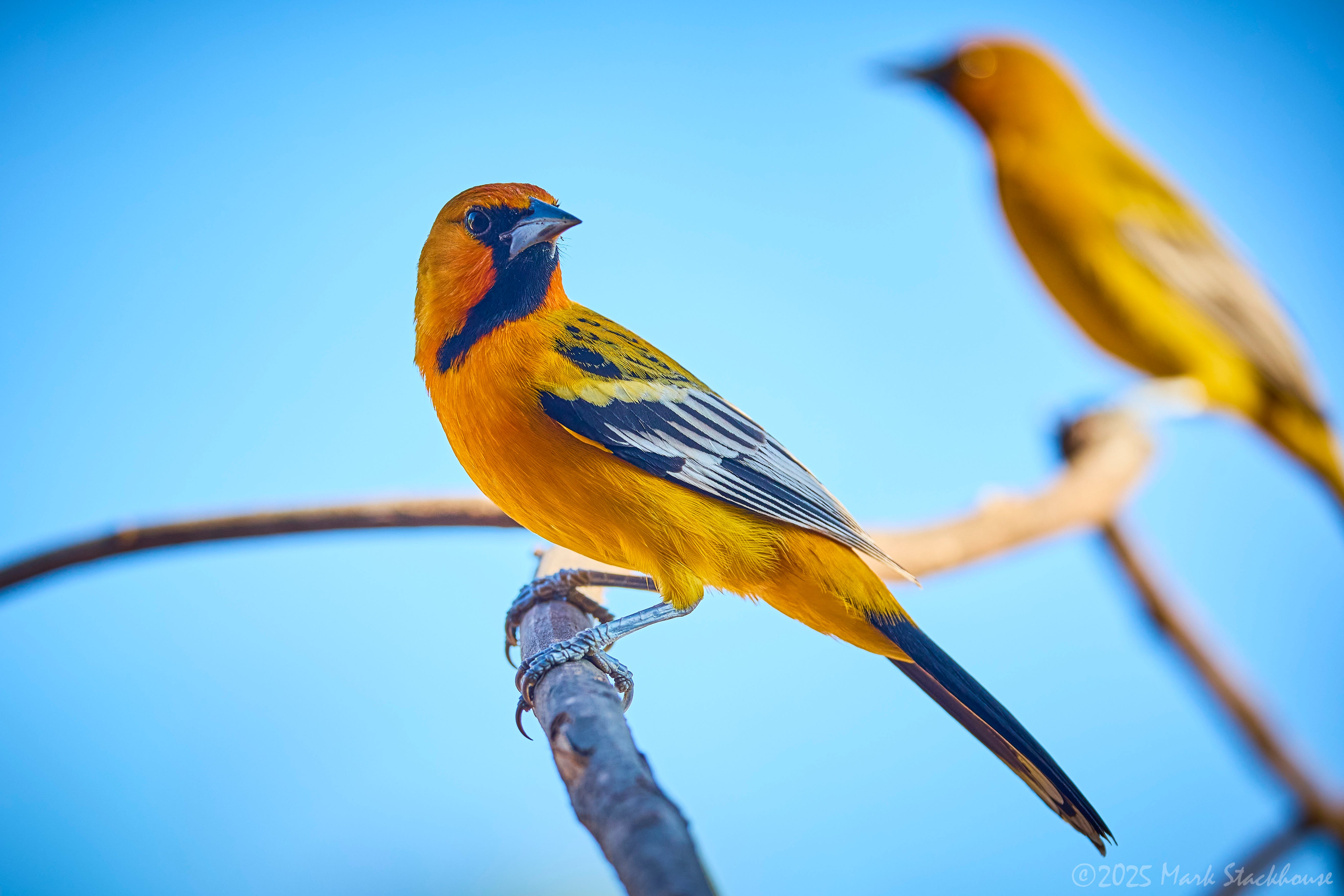
Just kidding. The only “effort” that this shot of a male Streak-backed Oriole, with a female behind, cost me was sitting up on the edge of my bed, turning on the camera that was already in position on the tripod, checking the focus and framing, and taking the the picture through the open bedroom window.
When the birds left the frame, I lay back down, pulled up the covers against the oh-so-mild morning coolness, and dozed off until the the calls of the next arrivals woke me again.
The suffering, effort, and patience required of wildlife photographers to get their awesome shots is legendary. Some, perhaps including photographers themselves, might say that luck plays a big part, too. But photographers truly know that it’s possible to create your own luck, with enough suffering, effort and patience.
I’m not sure that I can truly call myself a wildlife photographer. I don’t think I’ve spent nearly enough on camera gear, and certainly haven’t sold or published enough photos. But I do enjoy capturing images of the beauty that has mesmerized me these many years I’ve had on our lovely planet. I’m not a huge fan of suffering, though my tolerance threshold is fairly high. I can put in a fair amount of effort, in spite of my natural laziness. Patience, though, I have in spades. I can wait for something to happen with the best of them.
There is yet one more element involved, and that is understanding your subject. If you know how a creature you want to photograph behaves, you can save yourself a large amount of suffering and effort. You might even reduce the amount of patience needed. After spending my entire conscious life observing birds and nature, I have managed to accumulate a great deal of this knowledge.
With a little planning, and strategically applied effort, you might even be able to create appealing images while sitting in bed wearing your pajamas.
In my case, the road to that point was not a short or easy one. It started when we were searching for a house almost a year and a half ago. When we saw this house, my wife liked it right away, especially in that it was close to everything in town; easily in walking distance to anything we needed. But for me, it wasn’t quite wild enough. In spite of being close to the center of town, it had a good-sized yard, which was a plus. However, except for a few trees, the yard was incredibly sterile. It had potential, but would need lots of work and rehabilitation. The garden would have to be grown from the soil up.
The bedroom window was what intrigued me most. On the second floor, and overlooking the wooded campus of the high school, it looked to my practiced eye like a very good place for birding. In that, it’s proven true - so far I’ve observed 107 species of birds from that window since we moved in just over a year ago. But while the trees across the street are great for observing birds, they’re too far away for a top-notch photo. In bird photography there’s no substitute for proximity.
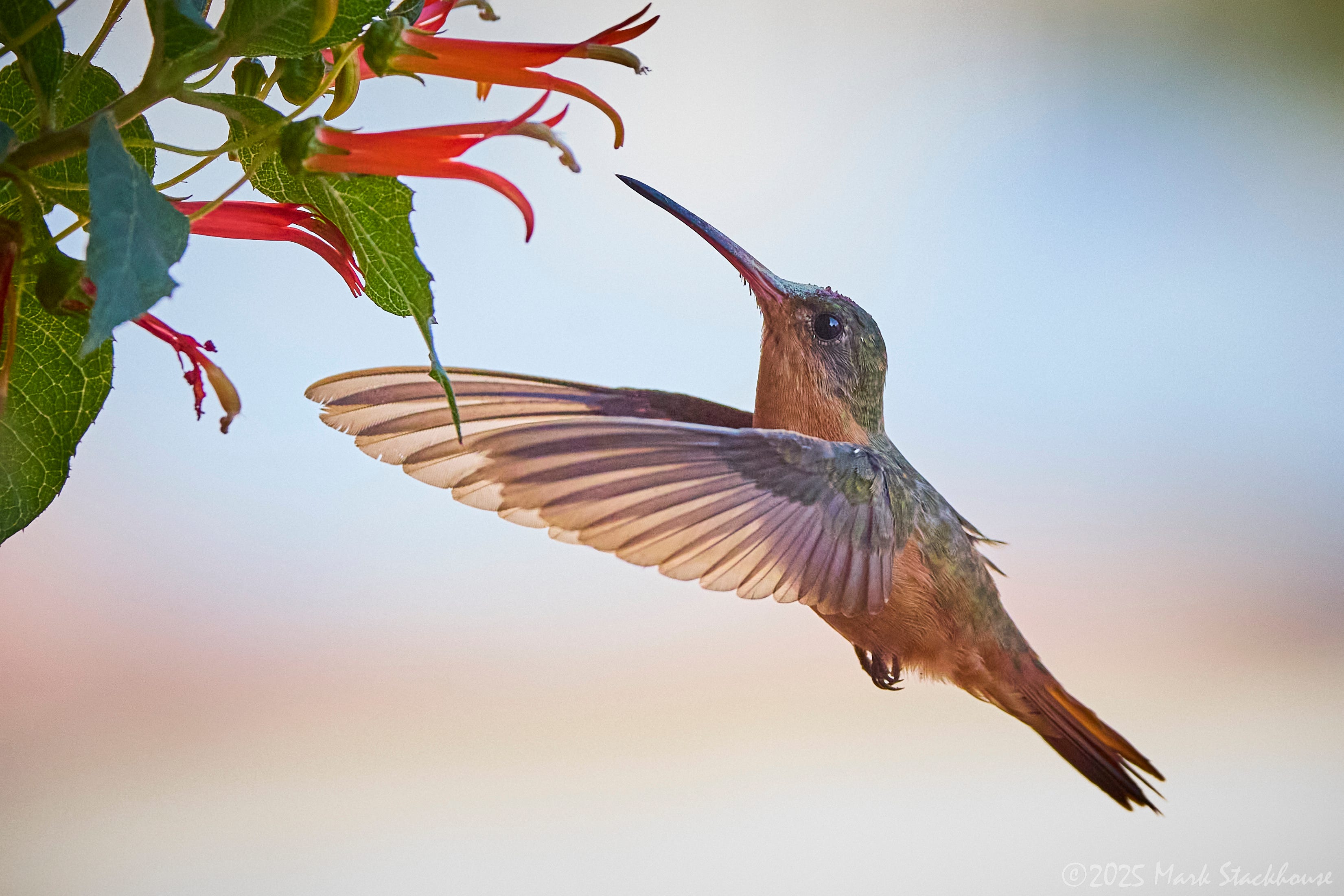
So what really caught my eye was not the view from the window, but the planter box that ran the width of the window. Never mind that it was just an empty concrete structure, without even drain holes for excess water to escape, what I saw was a second-story hummingbird garden. We had a few drain holes drilled, put in a layer of gravel harvested from the yard (there was lots of gravel!), added sacks of topsoil, made a trip to the native plant nursery in the Parque Ecológico in Tepic for a number of native flowers that attract hummingbirds, and the window-box hummingbird garden was born.
Build it and they will come.
As the flowers grew and bloomed, the resident Cinnamon Hummingbird became a regular visitor, and an immature male Broad-billed Hummingbird came, too. Through the open window, I got some excellent images. But by this time it was summer, and the migratory hummingbirds had all gone north. I had a crazy idea that if I hung a hummingbird feeder there, I might attract some of the returning migrants in the fall.
It was a crazy idea because hummingbird feeders in my yard don’t attract hummingbirds. Our resident birds seem to have no idea what a hummingbird feeder is. Perhaps there are so many flowers available that they’re not interested in the “fake” nectar, or maybe they just don’t know. In any event, my hummingbird feeders attract lots of orioles, caciques, woodpeckers, and even some warblers. But they don’t attract hummingbirds. However, I thought that since the migratory species must have learned about feeders up north, a highly-visible feeder might entice a passerby to visit.
So far, none have.
The resident Streak-backed Orioles, on the other hand, found it right away. And then the Golden-cheeked Woodpeckers came. In short, this lone feeder on the other side of the house was attracting the same clientele as the feeders in the back yard. Because they really like grape jelly in feeders made for orioles, I hung one of those from the same hook, above the hummingbird feeder. It’s proven to be very popular.
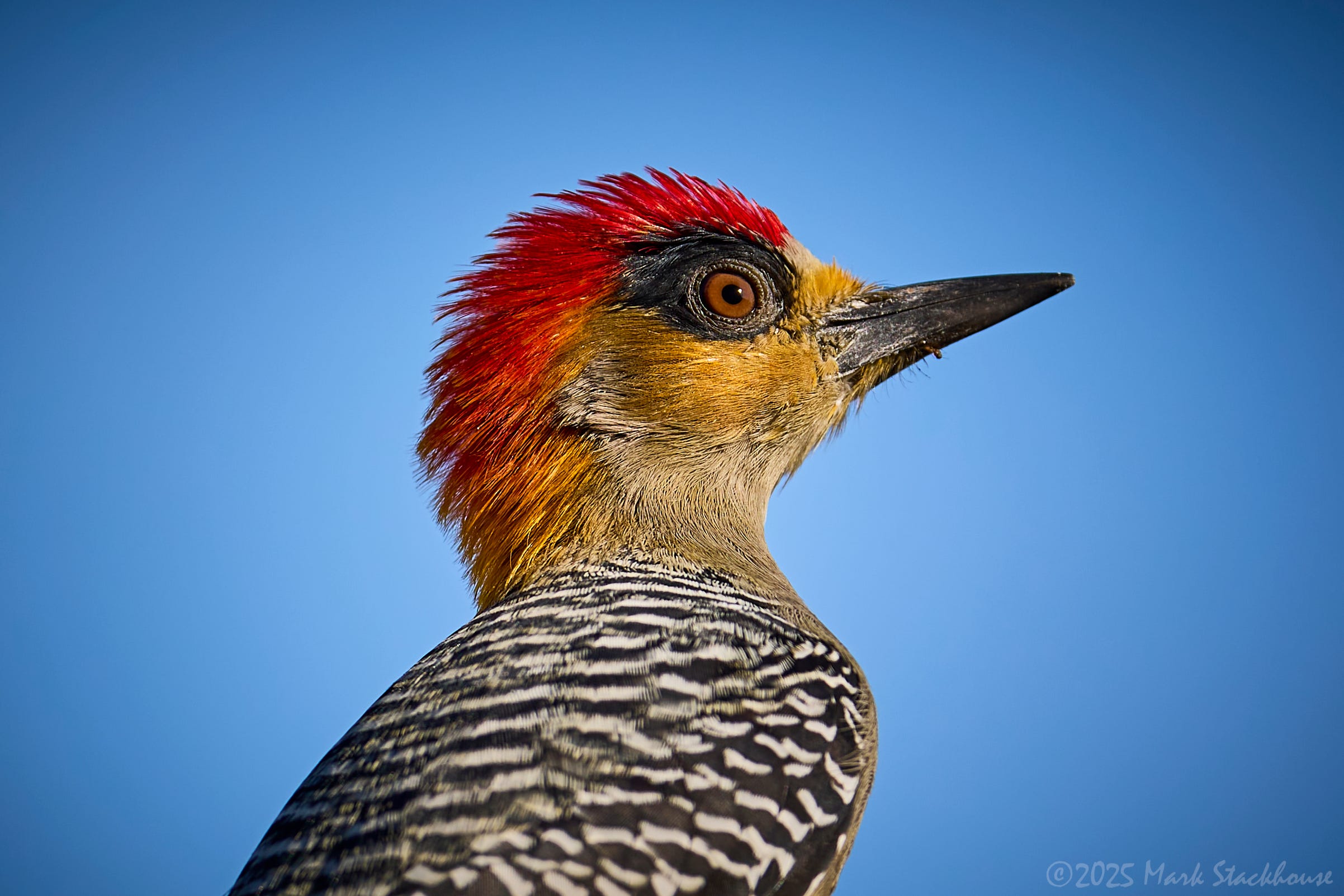
With no trees nearby, and the hummingbird flowers offering no good places to perch, these larger birds would fly in from more distant trees, and perch on the shepherd’s hook where the feeders are hung. Something needed to be done about that if I was going to photograph the orioles and others. At the end of summer, and mango season, we trimmed a number of low-hanging limbs from our mango tree, and I took a particularly large and nicely branched one, and “planted” it to one side of the feeders in the window box, anchored with some rocks to support the weight of the birds. I aimed the perches out away from the eaves of the house, where they catch the morning and evening sun.
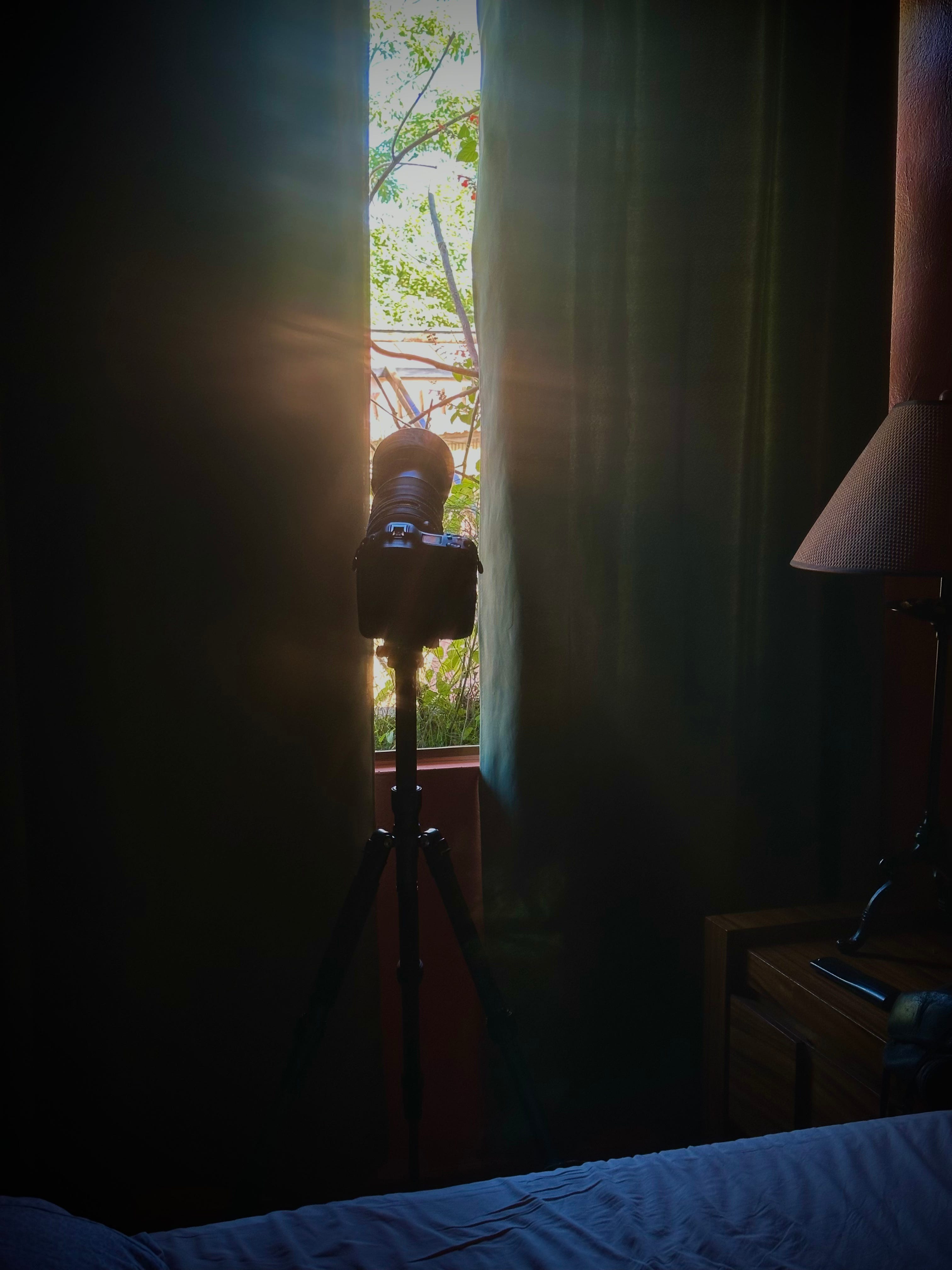
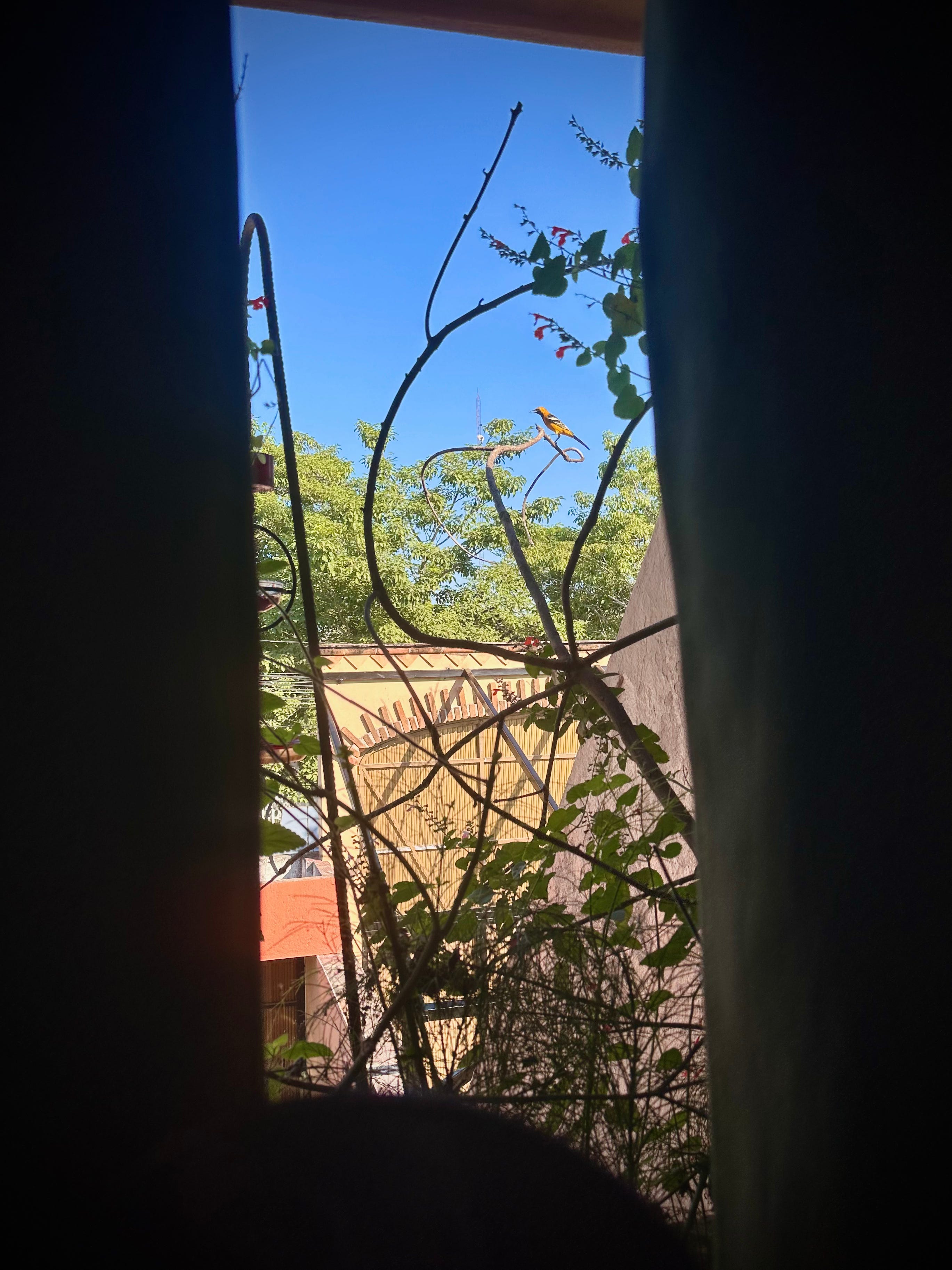
And with that, my bedroom window bird-photo studio was born. The birds love the perches, and the food. Every morning I get a different show, with migrants like Hooded Oriole beginning to arrive. If I set up the camera before turning in for the night, I only have to slide back the window screen, adjust the drapes, and wait for the next customer. Sure, it was a lot of work over a year’s time, and still requires patience, but the situation is much more comfortable than wading into a leach- and crocodile-infested swamp.
The birds are becoming more accustomed to the activity inside our room, and seem to be learning to “pay no attention to that man behind the curtain.”
Thanks Mark, for another terrific story. You really had me going at the beginning; it sounded like something you might do. Now, I'm no less impressed and appreciative for all the great photos and info. Enjoy your sleepy mornings!
Good work! I enjoyed reading this.